|
John Vaaler, Paper Clip Design
first registeredin 1899 |
Recently I have read the book on Design by Stephen Bayley and Terence Conran. Here are some exerpts from their book, as they trace the history of designs and present most valueable design ideas from the centuries. In this first part of the two part series I bring to you their thoughts, ideas and views on the development and history of design through the century.
A NOTE ON GOOD DESIGN
A good design is that it’s immediately visible. A bad design will not work properly, uncomfortable to use, badly made, look depressing and be poor value for money. Good design is a Le Corbusier said, “Design is intelligence made visible”.
Innovation is defining character of good design. The capacity to see a new solution to an existing problem is what a designer does. But that is not the same as saying good designs involves a restless search for novelty. Good design tends to be enduring. It’s this tension between finding effective innovations and achieving lasting values that, so far as I am concerned, gives the designer so much of his creative energy. I firmly believe it’s the designer’s responsibility to help improve the quality of people’s lives through products that works well, are affordable and look beautiful. - Terence Conran
 |
THE SCULPTOR, EDUARDO PAOLOZZI,
PAYS HOMAGE TO THE MASTER |
In Renaissance, draughtsman did what was called disegno. For Leonardo da Vinci, the greatest draughtsman of them all, disegno meant not just the art and craft of drawing itself, but the ability to communicate ideas graphically. Leonardo’s broad interpretation of disegno, what is very close to “Design” : An ability to conceptualize and idea, express it in materials and prove it by demonstration. When the word Disegno migrated into English in the 16th Century, it came to mean not merely ‘drawing’, but the intention. In his letter of application to Duke of Milan, Leonardo da Vinci put the design of useful canals far in front of his achievements that the mere decorative painting and sculpture.
Design is an art that works. - Stephen Bayley
1- An Industrious Love of Art
The beginnings of designs
 |
HOGARTH'S ABSTRACT 'LINE OF
BEAUTY' FRONT PAGE OF THE
BOOK |
Modern design is, culturally speaking, rather old. It’s rooted in two distinct historic developments. One was the division of labour (Industrial process of breaking down manufacturing into its component) and the other was refinement of techniques of high volume production. The technological and social changes that arose around these developments are familiarly known as the Industrial Revolution. Because Britain faced the artistic and social consequences of the Industrial Revolution before any other nation, it was in Britain that design developed first.
In 18th century Britain, literature was alive with metaphors of industry, the earliest factories offering poets spectacular visions of the future world. In “The Seasons” (1726-30) James Thomson wrote,” these are thy blessings, Industry, rough power” It was this sort of investigative, artistic awareness that led the painter William Hogarth to write his book “The Analysis of Beauty” (1753), in which he set out to quantify the laws which govern our responses to art. Elemnts of appropriateness and fitness dominate the texts; he is aware that forms that are in themselves elegant can xcite disgusts if they are misapplied.
Hogarth’s abstract ‘line of beauty’ (shown in the pyramid) suggests that in coming industrial age, art and design will escape constraints.
 |
Joseph Wright of Derby was one of the first artists to sense
(and then record) the drama and romance of the industrial revolution.
His Arkwright’s Cotton Mill by Night (1782-3)
is the first every oil painting of an industrial scene. |
2- LAWFUL PREY
Mass Consumption
 |
The architect Jacob - Ignaz Hittoriff's
Archeological investigations showed
that the Ancient Greek Temples were
Brightly colored |
The story of taste in the 19th century is one of confusion and crisis. It can be seen as two part drama.
The first act was the undermining by archaeology of the classical values which sustained Sir Joshua Reynolds and his academics, especially when an expedition to Sicily discovered that the ancient temples of the Greeks were not the austere, white edifices which neo-classicist and academicians had fancied, but were in fact garish and polychrome. The second act was the opening of consumerism to more than one social class as manufacturing exploded.
It was no longer possible to maintain, as Reynolds had done a century earlier, that there was a single standard of taste and that any man could achieve it; quite evidently, there were many standards. Artistic and philosophic attempts to rationalize these different standards form a fundamental past of the story of design in the following century.
With the loss of classical standards, many 19th century designers began to look to other sources for authority for their ideas, like deriving inspirations from this or that styles of the past, while other chose to be guided by moral standards rather than archeology. Among the first to react to the explosion in house and consumer designs was eccentric Architect Augustus Pugin, who turned to an idealized model of the Middle Ages (Which he imagined as an era of perfect social harmony) to serve as a didactic contrast to the world of the ‘depressed people’ which he saw all around him. He was the major intellectual force behind, and perhaps the greatest creative genius of, an ethical campaign, concentrated on architecture, which we call the Gothic Revival. His thought was a profound influence on Cole and his group: the ‘Journal of Design and Manufactures’ founded by Cole in 1849, is full of Pugin’s thought translated into sound ‘principles’, but contained a hard, commercial sense quite alien to Pugin’s medievalism.
 |
| The Colt is thrillingly more beautiful than a stuffed frog holding an umbrella |
While in Britain the problems of design reform and pubic taste preoccupied the authorities, in the United States a less self conscious attitude towards mass-production and consumption developed. During the second half of the 19th century, new companies in the United States surged ahead in the making of mechanical and electrical goods. At the same time, it developed a ‘culture’ for these goods for home and the office.
At first the design of the new American product was determined by the manufacturing processes by which they were made. Samuel Colt’s elemental ‘Navy’ model revolver which had shocked the British in 1851 was a remarkable example of how the aesthetic character of the product could be determined by machine-made, standardized parts.
3- A Kilogram of Stone or a Kilogram of Gold?
Survival and revival of craft value
In the later 19th century British Design became more involved with morals and ideology than even Pugin could have envisaged. To the leading writes of the age, the major challenge was to establish a simple and rational way of life but, in contrast the most celebrated contemporary designer William Morris offered what was basically an exclusive and elitist pseudo-medieval fantasy world. From Pugin via Ruskin and Morris a movement called the Arts and Crafts arose. In 1893, when William Morris took over The Arts and Crafts Exhibition Society, his influence and direction established John Ruskin’s barmy philosophy in the damaging and dominant place it retains in English imaginative life.
 |
William Morris' Merton workshop began selling painted earthen ware tiles
in 1872 |
 |
| A Swedish Interiors of 1885 |
Art and Crafts principles reached the public with the works of Ambrose Heal, a shopkeeper and furniture-maker and founder of the Design and Industrial Association (DIA). His store in London’s Tottenham Court Road was seen as an island of civilized values in an ocean of reproduction mediocrity.
Although ideas about fitness and propriety that had originated in Britain were taken up with enthusiasm in the German-speaking countries and in Scandinavia, where they were translated into the Modern Movement, there was so little response in their native country that Nikolaus Pevsner could declare in the Mid-thirties that Britain was 12 years behind the rest of Europe in accepting modern design.
Perhaps the keenest response to the demands of simplicity was found in Austria, a country whose relative industrial primitiveness offered a firmer basis for innovation. Its was in Austria that Michael Thonet had began his successful manufacture of bentwood furniture in the middle of 19th century.
 |
| Viennese Architect Adolf Loos |
It was also in Austria that the Architect Adolf Loos adapted Arts and Crafts view about simple materials, blended it with his own slick and idiosyncratic view of manners and style, and turned it into a ‘philosophy’ that was to be profoundly influential on the Modern Movement. He wrote in 1898, ‘What is worth more, a Kilogram of stone or a Kilogram of Gold? The question probably seems ridiculous. But only to a merchant. The artist will answer: all materials are equally valuable as far as I am concerned.’ This taste for simplicity reached such an extreme state with Loos that in 1908 he wrote an essay that h entitled ‘Ornament and Crime’. His thought became one of the strongest esoteric influences on Le Corbusier and the others who used Loos’s fevered proclamations as the ideological basis for ‘progressive’ European Architecture and Design between the wars
Arts and Crafts principles were imported, too, into the United States at the turn of the century, influencing the ideas and woks of Frank Lloyd Wright
4 - Hygiene of the optical
The romance of the machine
 |
United d'Habitation Marseilles 1946 -52
Le Corbusier's master piece
A complete concrete city (337 Appt.)
on stilts in a park |
The taste for simplicity and for the first principles in matters of design predisposed many architects and designer through out Europe and the United States to an awareness of the machine, both as a means of achieving rational modern design (in mass production ) and as a metaphor of that achievement (when mechanistic details were adapted for everyday things).
Although the proponents of this machine style believed that they represented the unalterably correct expression of the modern world, like ‘Functionalism’, the style was itself no more than an expression of a particular taste. But unlike functionalism, which is a philosophical attitude more than 200 years old, the romance of the machine developed solely in 20th Century.
Although the Germans had the greatest practical success with the impulse to standardized and to tidy up, it was with a Swiss architect, Le Corbusier, that the same impulse reached its extreme. He coined the ultimate expression of the machine-romantic sentiment when he declared that ‘a house is a machine for living in’. Misquoted and taken out of contexts this remark brought about such abuse that Frank Lloyd Wright rejoined, ‘Yes, but only insofar as the human heart is suction pump’, and Marcel Breuer added, ‘and you don’t want to get greasy if you lean against the wall’.
The taste for the machine living was never fully accepted in the United States, despite the success of the 1934 Machine Art Exhibition nor it was fully expected in Britain.
 |
Braun Electric razors 1950, 62, 84
A fine demonstration of design evolution |
After the II World War, the machine style reached its most highly developed state, especially in the products of the Frankfurt electrical company Braun and those of all its imitators from Britain to USA to Japan. It fell to Dieter Rams, Braun’s chief designer, to introduce some Bauhaus principles to the consumers.
 |
Henry J Kaiser's Boulder Dam, Colorado (1936)
Often cited as a heroic illustration of industrial art
in contemporary books and magazines |
To Be Continued Next week... please log in next week
Final chapters of Design
5 - The cash value of art
6 - La Ricostruzione
7 - Ugly, Inefficient, depressing Chaos
8 - All that is solid melts into air
Now I leave you all with some of the great example of design excellence over the centuries...
 |
Swedish Glass designer won the 1916 design competition
for Coca Cola bottle, perhaps the most successful packaging ever |
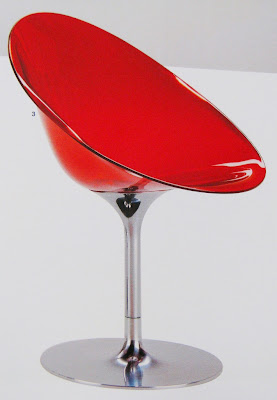 |
| The Ero/S chair by Phillippe Starck for Kartell |
 |
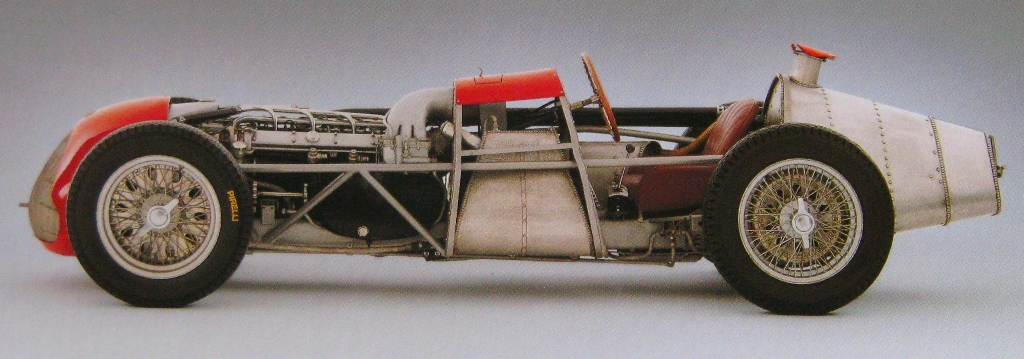
ALPHA ROMEO 1951
Henry Ford, of all people, used to raise his hat every time he saw an Alpha Romea |
 |
The B of Bang, Manchester UK 2005
By Architect Thomas Heatherwick (b 1970) |
Art of Seating A note on Good Design Part II